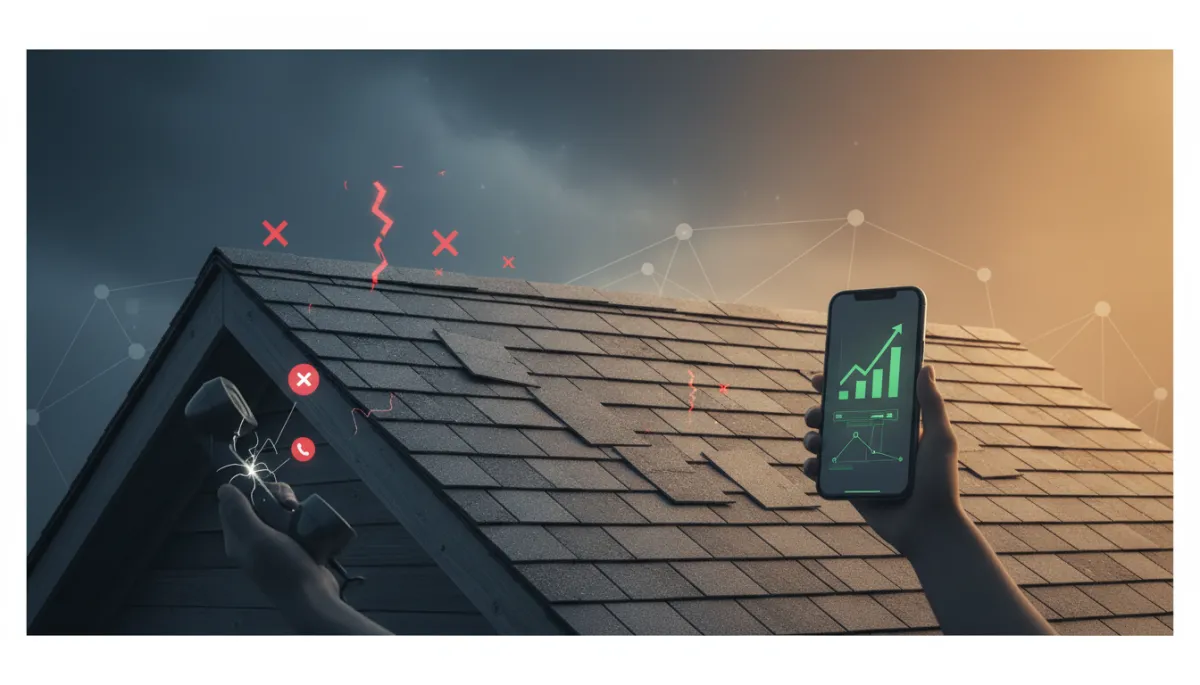
Stop Losing Roofing Leads: Improve Your Systems
Roofing Business Tips, Roofing Lead Generation
Why Roofing Companies Lose Leads Every Single Day (And How To Stop It)
If you feel like you’re “busy” but not actually growing, this is why: leads are slipping through your fingers every single day. Not because you’re bad at roofing, but because your systems for handling leads are weak, slow, or non-existent.

The Real Problem: Leads Are Leaking Out of Your Business
You’re paying for roofing lead generation — SEO, Google Ads, HomeAdvisor, yard signs, referrals. The phone rings, forms get filled out, messages come in. On paper, you should be booked out for weeks.
But here’s the truth nobody likes to admit: you don’t have a lead problem, you have a lead management problem. The calls, texts, and form submissions are coming in… and then disappearing into voicemail boxes, inboxes, and “I’ll call them back later” land. That’s where money goes to die.
If you had a camera on your business 24/7, you’d see it clearly: people trying to give you money, and your business not answering fast enough, often enough, or consistently enough. That’s why roofing companies lose leads every single day — and most owners have no idea how bad it really is.
Four Silent Killers of Your Roofing Leads
1. Missed Calls: The Most Expensive “I’ll Call Them Back”
Let’s start with the obvious one: roofing missed calls. Homeowners don’t shop for a roofer like they shop for a TV. They’re usually calling because something is leaking, damaged, or urgent. They have a problem now, and they want whoever answers first and sounds competent enough to fix it.
If you miss that call and they hit the next roofer on Google, you just donated that job to your competition. You paid for that lead. They got the revenue. That’s the most expensive charity work you’ll ever do — and you’re doing it daily if calls are going to voicemail during the day or ringing out with no answer.
2. Slow Response: Minutes Matter, Not Days
Even when you don’t miss the call outright, you can still lose the lead by being slow. A form comes in from your website. A message lands in your Facebook inbox. A text hits your phone. You’re on a roof, in a meeting, or driving. You think, I’ll get to it later this afternoon.
By the time you respond, they’ve already talked to someone else. In most markets, the first roofer to respond has a massive advantage. If you’re responding in hours and your competitor is responding in minutes, you’re losing — even if you’re the better contractor. Speed beats quality at the lead stage, because the homeowner can’t judge quality yet. They judge who actually picks up and follows up.
3. No Follow-Up System: One Call and Done
Here’s where most roofing companies blow it completely: there is no real follow-up system. A lead calls, you talk once, maybe you send an estimate, and then… nothing. If they don’t say “yes” on the spot, they fall off your radar. You move on to the next fire in your day, and that lead goes cold fast.
The reality is, a big chunk of homeowners need a few touches before they decide: a reminder text, a call back, an email with the estimate, a nudge a couple of days later. If you’re not doing structured follow-up, you’re leaving 20–40% of potential jobs on the table. That’s not a guess; that’s what happens when companies finally implement proper roofing lead management and start tracking it.
4. After-Hours Gaps: Your “Closed” Sign Is Their “Call Someone Else”
Storms don’t check your office hours. Neither do leaks. A lot of roofing leads come in after 5 p.m. and on weekends — exactly when you and your office team are trying to have a life. Fair enough as humans, but the market doesn’t care. If nobody answers or responds quickly, that homeowner is calling the next company on their list while you’re eating dinner.
Having no after-hours process is like turning off your sign and hoping people remember you tomorrow. Some will. Most won’t. They’ll just book with whoever made it easiest to get an appointment right then and there.
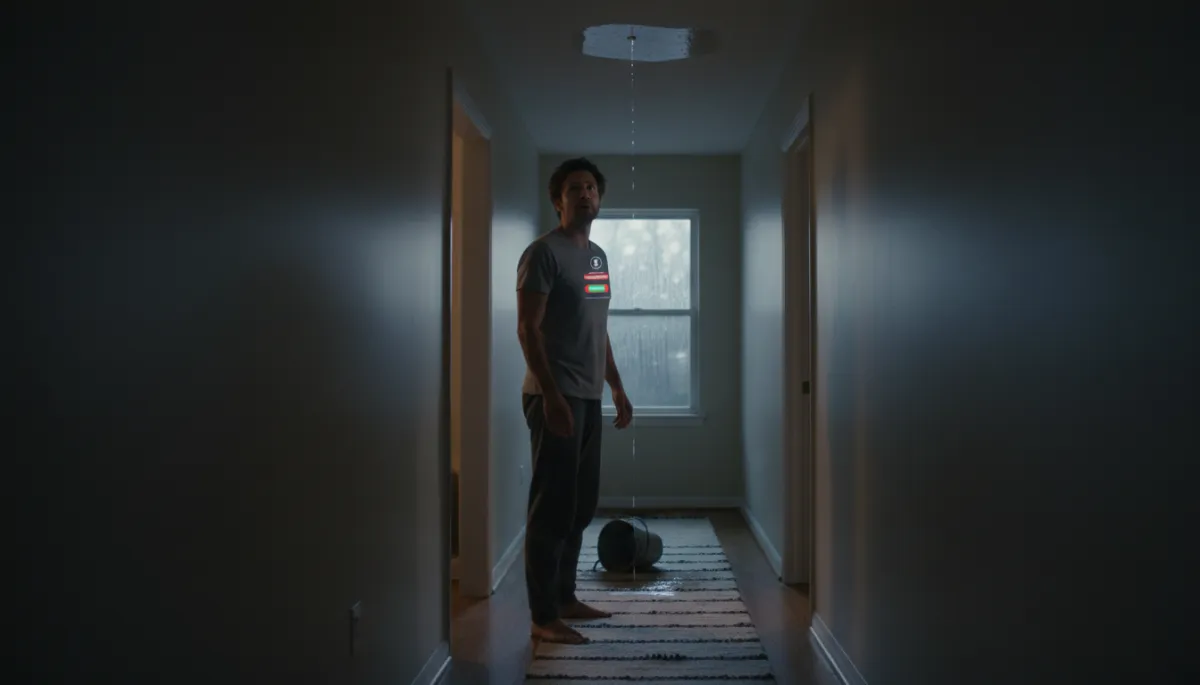
When you don’t answer after hours, that urgent roofing job goes elsewhere.
The Hidden Cost of Doing Nothing
Let’s put some simple numbers to this. Say you get just 5 new leads a day from all sources — calls, web forms, referrals. That’s 150 leads a month. Now be honest: between missed calls, slow responses, and weak follow-up, could you be dropping even one lead a day? Most roofing businesses are dropping more than that, but let’s stay conservative.
One lost lead a day is about 30 lost leads a month. If just a third of those would have turned into jobs, that’s 10 jobs gone. At an average profit of, say, $2,000 per job, that’s $20,000 of profit walking out the door every month — not revenue, profit. That’s $240,000 a year because your phones, follow-up, and response times are sloppy or manual.
And that’s just the direct cost. You’re also losing:
- Referral chains from customers you never got to serve
- Reviews that could have boosted your Google ranking
- Lifetime value from repeat work (gutters, future repairs, upgrades)
Doing nothing doesn’t keep you where you are. It quietly pushes you backwards while your competitors tighten up their systems and scoop up the leads you’re dropping.
The Fix: Systems and Automation That Don’t Rely on Your Memory
You don’t need to work harder. You need to stop running your lead flow on sticky notes, inboxes, and good intentions. The answer is simple: build systems, then automate as much as possible. Here’s what that looks like in a roofing business that’s serious about not wasting leads.
1. Centralized Roofing Lead Management
Every lead from every source goes into one place: calls, texts, website forms, Facebook, Google, lead vendors. No more leads living in random inboxes or one person’s phone. Use a simple CRM or lead management tool built for contractors, and make it non-negotiable that every new inquiry gets logged automatically or manually within minutes.
2. Instant Response Automation (So You’re “Fast” Even When You’re Busy)
When a lead comes in, something should happen within seconds — even if you’re on a roof or in the truck. That can be:
- An automatic text: “Hey, this is Smith Roofing. Got your request. What’s the address and best time to inspect?”
- An email confirming you received their form and will call shortly
- A missed-call text-back that fires automatically when you can’t pick up
This alone will plug a huge hole. It tells the homeowner, “We’re real, we’re paying attention, and we’ll take care of you.” That keeps them from calling the next roofer on the list while you’re driving to your next job.
3. Structured Follow-Up Sequences
Stop relying on memory or scribbled notes to remember who to call back. Build a simple follow-up sequence that runs automatically:
- Day 0: Instant text + call attempt
- Day 1: Follow-up text if no contact yet
- Day 3: Quick call + short email with value (e.g., “Top 3 things to check after a hailstorm”)
- Day 7: Last-chance message: “Still need help with your roof or did you get it sorted?”
That’s not spam. That’s professional persistence. And when you automate it, it runs in the background while you focus on production, not chasing people manually all day.
4. After-Hours Capture and Scheduling
You don’t need to sit by the phone all night, but you do need a way to capture and reassure after-hours leads. That can be:
- A voicemail greeting that tells them to text and promises a call back at a specific time
- An automated text reply to missed calls after hours with a link to book an inspection slot
- A simple online booking page that lets them grab tomorrow’s open times
The goal: when someone reaches out at 9:30 p.m., they should still feel like they made progress. If they can book a time or at least get a clear, automated confirmation, you keep them instead of handing them to the roofer who happens to answer at 9:35.
5. Track the Numbers, Not Your Feelings
Finally, stop guessing. Track:
- How many leads came in this week
- How many you actually contacted within 15 minutes
- How many turned into booked appointments
- How many appointments turned into signed jobs
When you see the numbers, you’ll know exactly where you’re leaking — and you’ll see how fast systems and automation plug those leaks and turn “busy” into profitable.
Stop Donating Jobs to Your Competition
You’re not losing leads because you’re the worst roofer in town. You’re losing them because your systems are weaker than they need to be in a market where homeowners expect instant replies and clear follow-up. The companies that win aren’t always the best roofers — they’re the ones who answer first, follow up consistently, and make it stupidly easy to book an appointment.
If you’re serious about growth, stop obsessing over “more leads” and fix what happens after the phone rings or the form is submitted. Tighten up your roofing lead management, automate your responses, and build simple follow-up that runs whether you’re on a ladder or on holiday.
Your Next Move (Don’t Overcomplicate It)
Here’s the simple play:
- Audit the last 30 days of leads. How many came in? How many did you actually contact within 15 minutes? Be brutally honest.
- Put a basic system in place: one central place for all leads, instant text reply, and a simple 7-day follow-up sequence.
- Automate everything you can so it doesn’t depend on you remembering or your office “having a good day.”
Do that, and you’ll close more of what you’re already getting — without adding a single extra lead source.
Ready to Stop Bleeding Leads?
If you’re tired of roofing missed calls, slow responses, and “I thought the office handled that one,” it’s time to treat your lead flow like the lifeblood of your business — because it is. The companies that win the next few years won’t just be the ones that swing a hammer well. They’ll be the ones that run tight, automated systems from first contact to signed contract.
Don’t wait for another season to pass while your competitors cash in on the leads you paid for. Decide today that you’re done leaking money out of your phone lines and inboxes — and put the systems in place to back that decision up.
CTA: Take the next 30 minutes to map your current lead flow on a sheet of paper — from first contact to booked job. Circle every point where a lead can fall through the cracks. Then either build the systems yourself or bring in someone who understands roofing lead generation and automation to help you fix it. But don’t go to bed tonight without starting. Every day you wait, more leads — and more profit — disappear.
Written byCane Petkovski
